
Diagnostic Services
Dental X-Rays
Radiographs let us see between teeth, below the gumline, and inside the bone, so we can catch problems early and plan care with confidence.
Why dental x-rays matter
A clinical exam shows what is visible to the eye. Dental x-rays reveal what is happening between teeth, under restorations, below the gumline, and inside the surrounding bone, areas where decay, infection, or bone changes can develop before you feel symptoms.
Finding issues early usually means simpler treatment. X-rays are one of the most important tools your dental team uses to diagnose accurately and monitor your oral health over time.
Types of dental x-rays we take
Bitewing x-rays show the crowns of the upper and lower back teeth. They are used primarily to detect cavities between teeth and to assess bone levels supporting those teeth.
Periapical x-rays capture a full tooth from crown to root tip, including the surrounding bone. They help diagnose abscesses, root fractures, and bone changes around a specific tooth.
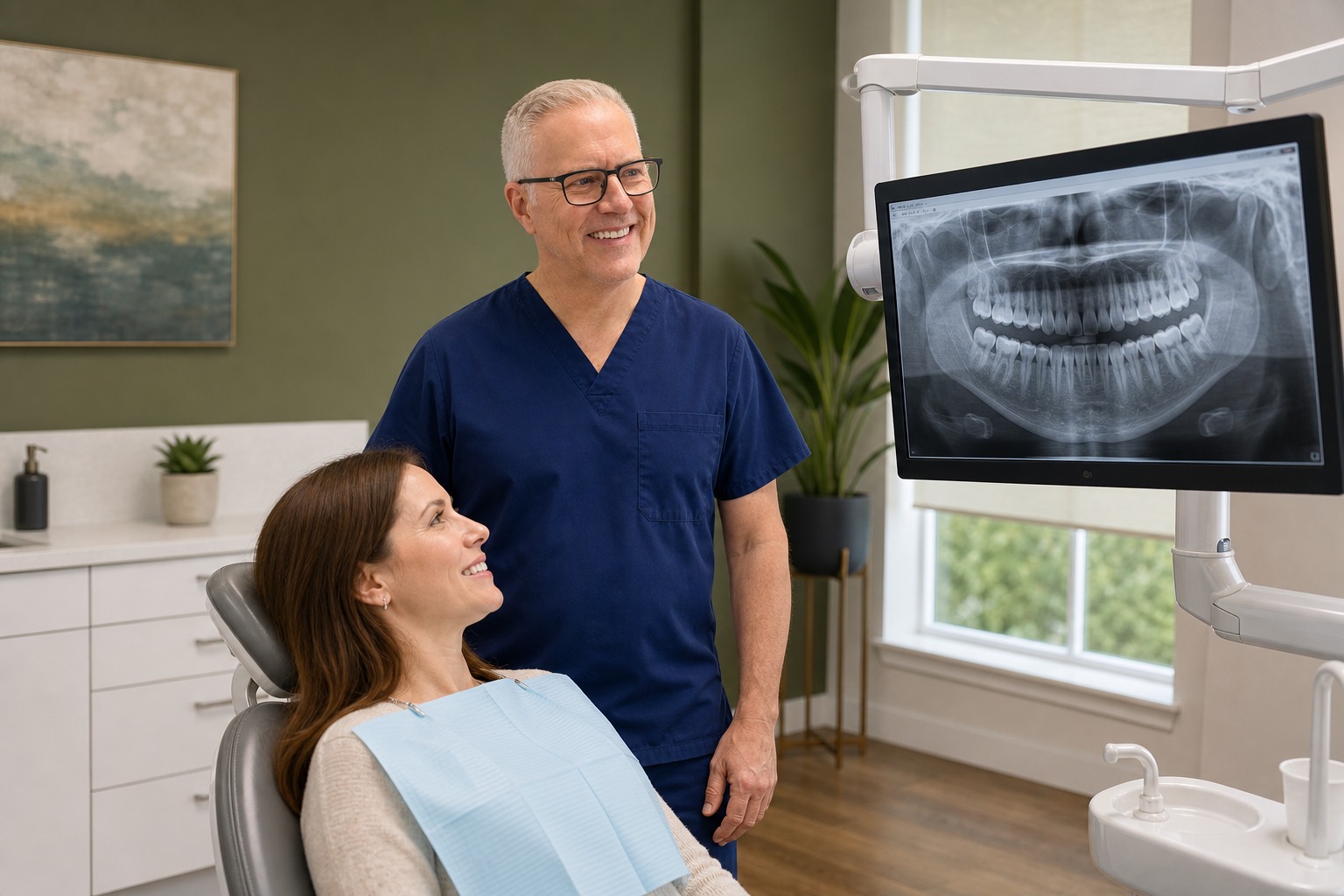
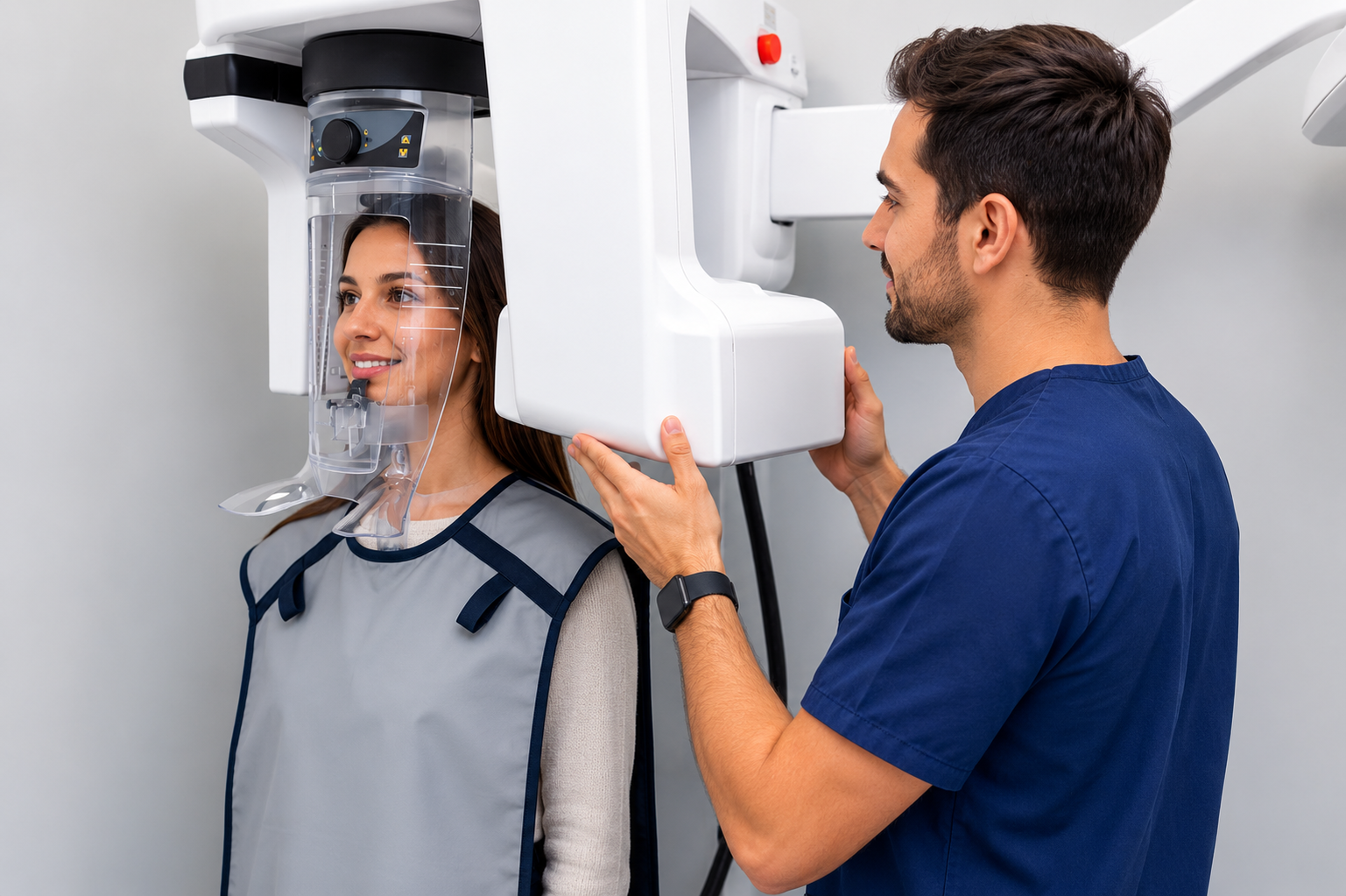
Panoramic x-rays capture the entire mouth in a single image: all teeth, both jaws, the temporomandibular joints, and surrounding anatomy. They are often taken for new-patient baseline records and periodically to monitor changes across the full arch.
How often are x-rays needed?
Frequency depends on your dental history, cavity risk, gum health, and how long it has been since your last set. We follow evidence-based guidelines and do not take x-rays on a fixed schedule for everyone. When imaging is recommended, we explain why that type of radiograph is useful for your care.
For broader digital records, clinical photos, and how images are stored and shared, see our diagnostic imaging page.
Radiation and safety
All dental x-rays involve some exposure to ionizing radiation. Digital sensors require significantly less radiation than older film systems, typically 70–90% less, while still producing clear diagnostic images.
We use protective measures such as lead aprons when appropriate, keep exposure as low as reasonably achievable, and recommend radiographs only when the clinical benefit supports it.
Ready to Book?
Call us or book an appointment online, new patients welcome.
Book Appointment 780.452.5700